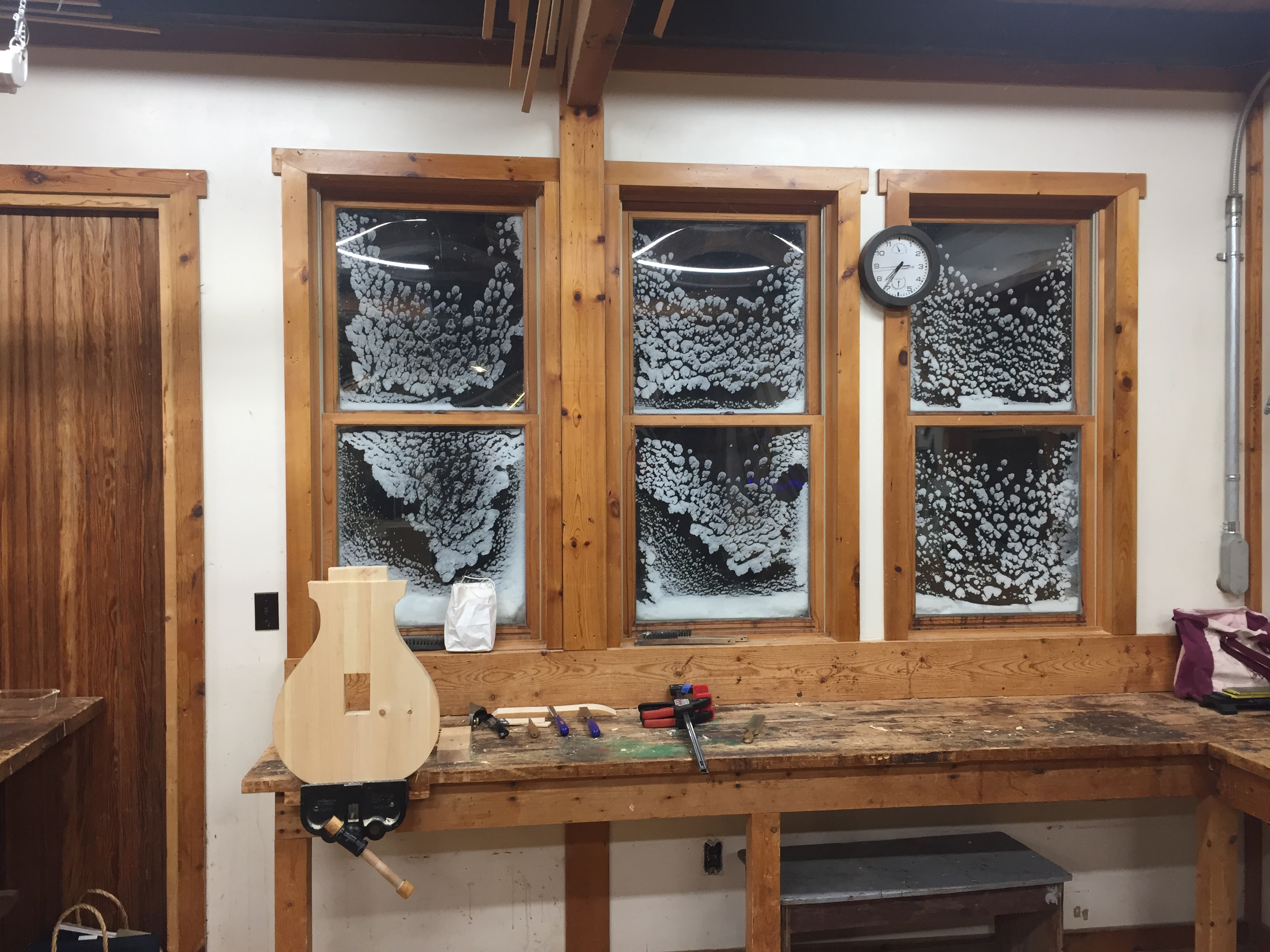
Most home-shop injuries are avoidable with a few consistent habits. None of this is complicated, but it only protects you if you do it every time. The points below apply to hand-tool work as well as power tools, and include considerations specific to Canadian garages and basements.
Protect your eyes and ears
- Safety glasses: wear them whenever you cut, chop, or sand. Chips and flecks move fast and unpredictably.
- Hearing protection: earmuffs or plugs for any loud power tool. Hearing loss from noise is gradual and permanent.
Manage dust
Fine wood dust is a respiratory hazard, and some species are more irritating than others. Work with ventilation, wear a fitted dust mask or respirator when sanding, and clean up dust rather than letting it accumulate.
Work safely with sharp tools
- Keep both hands behind the cutting edge; a slip travels in the direction you push.
- Clamp the workpiece so it cannot move. One hand should never be holding the work while the other cuts toward it.
- A sharp tool is safer than a dull one because it needs less force and is less likely to skid.
Electrical and fire considerations
Garages and basements often have limited circuits. Avoid daisy-chained extension cords, and do not overload an outlet with several power tools and a heater at once.
Oily rags are a real fire hazard. Cloths soaked with certain wood finishes (such as oil-based products) can self-heat as they cure. Spread them flat to dry outdoors or store them in a sealed metal container, and follow the disposal instructions on the product label.
Heating and the Canadian winter
Many home shops are heated only when in use. Bringing cold tools and materials into a warm, humid space causes condensation, which leads to rust and can affect glue-up. If you use a portable heater, keep it clear of sawdust and finishes, and never leave it running unattended.
A basic first-aid habit
Keep a stocked first-aid kit in the shop and know where it is before you need it. For workplace and tool safety guidance, the Canadian Centre for Occupational Health and Safety (CCOHS) publishes publicly available fact sheets.
Safety habits only work when they are automatic. Build them in from your first project.